Exhibitions
Exhibitions > What's on
-
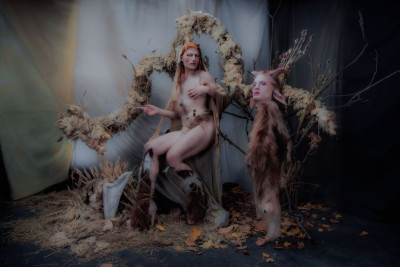 29.08.–31.10.2026
Unzucht
Kiss the Devil's Arse
In their solo exhibition “Unzucht – Kiss the Devil’s Arse”, Itchi Fleischer weaves a dense web of art-historical references drawing heavily on Christian iconography, only to immediately challenge it, turn it on its head and confront visitors with the structures of patriarchal power, fear and desire that underpin the institution of the Church and have for centuries enabled the oppression, exclusion and demonization of women and queer people.
- Itchi Fleischer
Learn more
Exhibitions > Archive
-
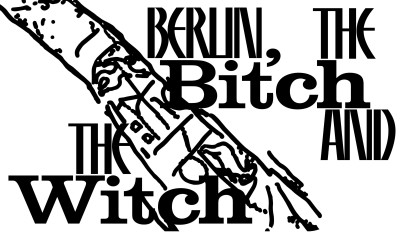 13.06.–23.08.2026
Berlin, the Bitch and the Witch
The group exhibition brings together artists who use magic as a method to reveal the invisible structures of urban capitalism. Through movement, sound, and fiction, the works open up a space for care, resistance, and new forms of survival in Berlin.
Learn more -
 28.03.–07.06.2026
Fenster Türen Wände
The works of Clara Bahlsen and Sophie Aigner navigate the thresholds between visibility and concealment, body and space. Windows, walls, and openings simultaneously mark boundaries and facilitate transitions.
Learn more -
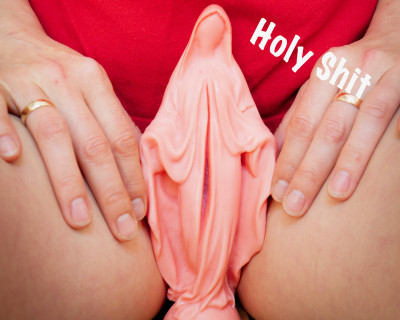 30.08.–31.10.2025
HOLY SHIT
oder das stille Örtchen
HOLY SHIT is an artistic exploration of the relationship between faith and the body, between devotion and exclusion, between the sacred and the everyday. The starting point is a place that stands like no other for the repressed, the intimate, the devalued: a disused toilet block. A room that once served as a place of need now becomes a temporary sacred space.
Learn more -
 07.06.–24.08.2025
EARTH'S SHADOW, MOON'S CRUST
Earth’s Shadow, Moon’s Crust is an exhibition that explores the layered relationship between Earth and Moon. Taking the terrestrial viewpoint as a starting ground, it examines how our understanding of the cosmos is deeply entangled with natural, bodily, and cultural realms. Featuring works by Alice Dittmar and Stella Geppert alongside a program of live performances, the exhibition invites visitors to see the Moon not only as a distant celestial body, but as a mirror of our inner and earthly landscapes.
Learn more -
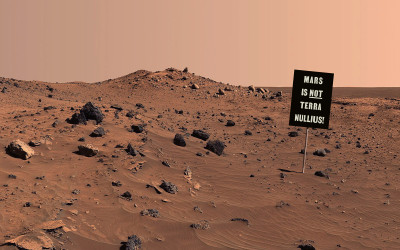 05.04.–01.06.2025
Cosmopolitics
In the era of the New Space, Cosmopolitics argues that the cosmos is a common good belonging equally to all terrestrial entities. Treated as an infinite resource by private and governmental agents eager to exploit it, its actual finiteness calls for a collective stewardship, a democracy beyond national and anthropological boundaries.
Learn more